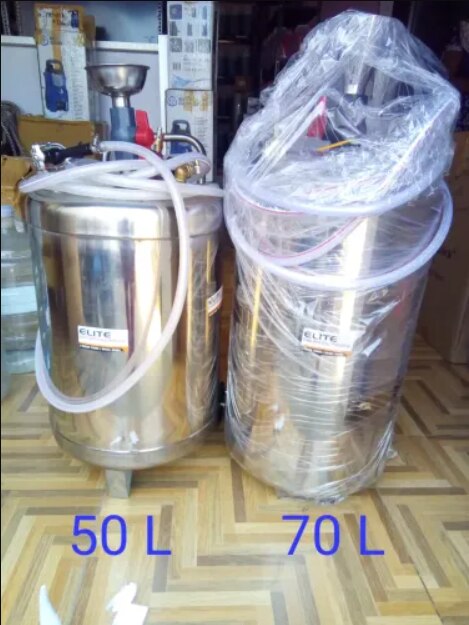
A 70-litre label does not tell you how much solution the tank safely holds, how much air it consumes, or what the quoted price includes. By checking the pressure ratings, usable capacity, compressor demand, included fittings and local support, you can compare quotations and choose equipment that suits your detailing workload.
Key takeaways
- Confirm working pressure, test pressure, capacity and connections before comparing quotes.
- Ask for the vessel test certificate, safety valve details and pressure gauge range.
- Match compressor output to the foamer’s required air pressure and flow.
- Compare installation, spare parts, servicing and response time—not only the tank price.
What should a 70-litre foam tank specification include?
A 70-litre specification must define capacity, pressure, connections and installation needs before you compare prices. A foam cylinder for car detailing is a compressed-air pressure foamer: you fill it with diluted detergent and discharge the air–solution mixture through a foaming nozzle. It is not a foam lance that draws chemical from a pressure-washer line.
| Capacity description | What it means | What to confirm |
|---|---|---|
| Gross capacity | Total internal vessel volume | Whether the shell holds 70 litres |
| Usable capacity | Liquid volume available during operation | The permitted fill volume |
| Maximum fill capacity | Highest allowed liquid level | Required unfilled headspace above it |
Request these details in writing:
- Tank dimensions, footprint and base requirements; vessel material and grade; liquid outlet and air inlet sizes.
- Air-inlet and foam-outlet thread types, fill-opening diameter, drain arrangement and supplied hose length.
- Pressure-gauge range, normal operating pressure and safety-relief-valve setting.
- An identification plate or document naming the manufacturer, capacity, design pressure and hydrostatic or factory test information.
Do not accept “70 litres, stainless steel” as a complete specification. The installation needs a level, stable base, drainage for flushing, ventilation and clearance to read the gauge and operate controls. Protect the vessel, fittings and hose from vehicles, trolleys and impact.
Include a regulator, moisture separator or water trap, isolation valve and non-return protection in the layout.
How do you verify that the tank is safe to pressurise?
Do not treat 3 bar and 6 bar as competing promises until the seller labels each figure. A tank is safe to pressurise only when its vessel rating, operating limit and protective devices are documented together.
| Figure quoted | What it must mean |
|---|---|
| 3 bar | Normal operating pressure, if that is the intended working setting |
| 6 bar | Maximum working pressure, component rating, hydrostatic test pressure or factory test pressure, as explicitly stated |
Reject the quotation if it omits any of these: vessel rating, relief-valve setting or a readable pressure-gauge range. Request a photograph of the pressure-vessel identification plate or a test document showing the manufacturer, capacity, design pressure and test information. A gauge that cannot display the stated operating pressure is not useful protection.
“Stainless steel” alone proves nothing about pressure-vessel safety. Ask for the grade and fabrication details: SS304 suits many detergent applications, while SS316 offers better resistance to chloride exposure; neither grade compensates for poor welds, incorrect wall thickness or an unrated shell.
Specify the air line with these protections:
- Pressure regulator
- Moisture separator or water trap
- Isolation valve
- Non-return valve
- Correctly rated relief valve
- Pressure gauge and drain or flushing arrangement
Moisture and compressor oil can contaminate solution, disrupt foam consistency and accelerate corrosion. Do not fill or pressurise the tank until the documents and component ratings agree.
What compressor and accessories does a 70 L foamer need?
Do not approve an existing compressor from its receiver size or a “3 bar” label. For a 70 L foam tank for professional car wash use, match the compressor’s continuous air delivery to the foamer’s stated demand at its operating pressure.
A large receiver stores air for a short burst, but it cannot supply repeated vehicle washing if the compressor pump is undersized. Pressure alone also fails to predict foam output: nozzle orifice, hose restriction, chemical viscosity, dilution, air-to-liquid ratio and the foaming element affect density and cling.
Ask the supplier to state these details in the quotation:
1. Compressor type, receiver capacity, continuous delivery in CFM or litres per minute, cut-in pressure, cut-out pressure and air demand at the specified operating pressure.
2. Air regulator, readable pressure gauge, correctly rated relief valve, shut-off valve and non-return valve. Confirm that the relief setting and gauge range match the tank documentation.
3. Chemical pickup tube, hose length and internal diameter, foam lance, nozzle or orifice size, and quick couplers. Confirm whether each item is included or excluded.
4. Moisture separator or water trap, compressor-oil control, and a drain or flushing provision. Water and oil in the air circuit can spoil foam consistency, contaminate detergent and accelerate corrosion.
5. Chemical compatibility for every seal, hose, fitting and foaming mesh or element. Get written confirmation for the detergent you will use, not just for clean water.
Run the proposed compressor through repeated wash cycles before purchase; a short demonstration can hide recovery problems.
How should you operate and clean the tank during detailing?
Operate the tank in the detergent maker’s sequence, not by copying a universal shampoo dosage. Follow the product label, test its dilution on the target vehicle type, and adjust only within the label’s instructions.
- Add water and detergent, leaving the headspace specified for the tank. Do not fill to the lid.
- Close the vessel fully, connect filtered compressed air, and pressurise only within the documented operating limit.
- Test the spray pattern on a safe surface before applying foam. Check coverage, wetness and flow rather than increasing pressure automatically.
- Apply foam from the lower panels upward so the product reaches dirty areas without prematurely rinsing lower sections.
- Allow the label’s stated dwell time, then rinse before the foam dries. Dried detergent can leave residue or require extra agitation.
- Shut off air, depressurise the vessel completely, and confirm zero pressure before opening it.
- Flush the tank and hose with clean water, operate the gun briefly to clear the line, and drain remaining solution after use.
Foam cling depends on chemical concentration, water hardness, viscosity, air-to-liquid ratio, nozzle design, hose restriction and the condition of the foaming mesh. Pressure alone can produce wetter foam rather than better foam.
A 70-litre tank can waste chemical when detailing jobs are intermittent: diluted solution sits between vehicles, while the larger vessel takes more water, floor space, rinse time and handling effort. A smaller tank or easy-clean design may reduce that waste.
How should you compare a Coimbatore quotation and local support?
A 70 litre foam tank price in Coimbatore is comparable only when every cost is visible, not when the vessel price is shown alone.
| Item | Ask the quotation to show | Why it matters |
|---|---|---|
| Tank and controls | 70-litre vessel, pressure gauge, relief valve and regulator: included or excluded | Missing controls can prevent safe operation |
| Air and application kit | Compressor, hose, gun, lance, nozzle, air fittings and quick couplers | An undersized compressor or missing couplers can stop work |
| Site and ownership costs | GST, delivery, installation, commissioning and spare seals | A low equipment-only quote can become the expensive option |
Ask a 70l foam tank supplier in Coimbatore or foam tank dealer in Coimbatore these questions before paying:
- Does the service area cover your Coimbatore site, and is there a showroom or a defined delivery arrangement?
- What is the dispatch time after payment?
- What does the warranty cover, and which exclusions are printed in writing?
- Which seals, hoses, nozzles and fittings are stocked, and how do you request replacements?
- Who handles a fault, through which phone or message process, and within what response time?
- Will you run a live foam test using your detergent and water?
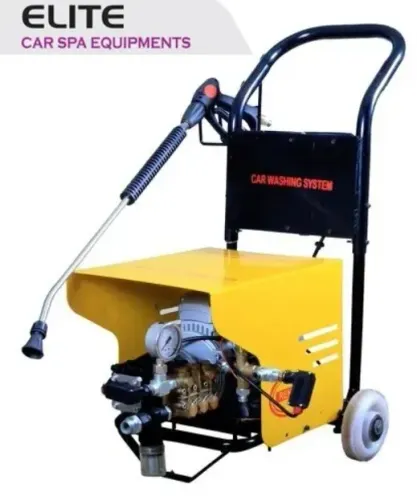
Elite Car Spa Equipments is one local supplier you can contact for these specific answers; still require written specifications and inclusions.
Compare refill frequency, solution consumption, rinse time, floor space and after-sales downtime—not just the lowest equipment-only quote. A test also reveals actual usage instead of an unverified promise about cars per fill.
Related product
 | foam cylinder ₹14000 Weight 19 Kg Features Stainless steel grade 304 Motor Power 3bar air pressure Pressure Capacity 3bar - 50L tank Model 50L Type Compact Brand Elite... View product → |
Frequently asked questions
What should a 70-litre foam tank specification include?
Specify usable capacity, working and test pressure, tank material, inlet and outlet sizes, safety valve, pressure gauge, drain and spray accessories.
How do you verify that a foam tank is safe to pressurise?
Check the nameplate, manufacturer documents, vessel test certificate, weld condition, pressure rating, calibrated gauge and correctly rated safety valve before use.
What compressor and accessories does a 70-litre foamer need?
Choose a compressor that meets the tank’s stated pressure and air-flow requirement, then confirm the hose, regulator, couplers, lance, nozzle and drain arrangement.
How should you operate and clean the tank during detailing?
Use the specified detergent dilution, stay below the working pressure, depressurise before opening, rinse the tank and hose, and clear the nozzle after each shift.
How should you compare a Coimbatore quotation and local support?
Compare the complete installed cost, included accessories, delivery, commissioning, warranty, spare availability, preventive service and technician response time.
Keywords