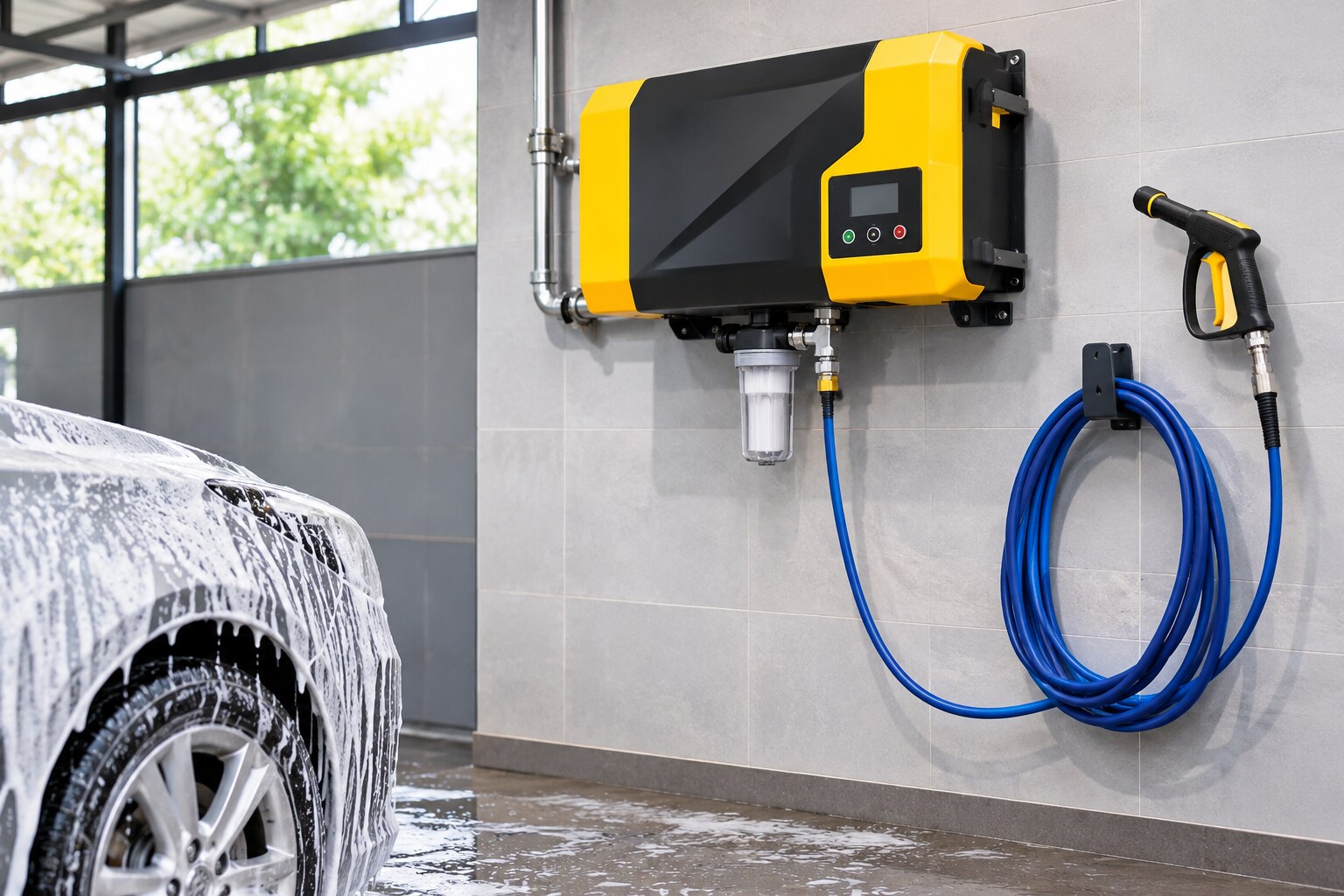
A wall-mounted system saves floor space only when the bay, structure, utilities and daily workflow can support it. You will be able to test those conditions, separate machine space from total customer-bay space, and identify the installation risks that make another wash setup a better choice.
Key takeaways
- Confirm the wall can carry equipment, hose loads and operating vibration.
- Measure bay clearance, drainage capacity and hose reach before ordering.
- Match pump pressure, flow rate and chemicals to the cleaning work.
- Choose wall mounting when it saves space without slowing daily washing.
What a Wall-Mounted Car Wash System Actually Is
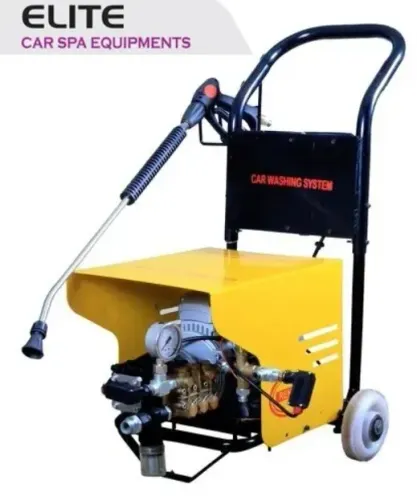
A wall mounted car wash system fixes its pump, motor, hose reel or boom, lance and chemical-delivery unit to a structural wall, column or engineered support frame. Water and detergent travel through the hose to a hand-held spray gun, or to a powered wash arm or small gantry.
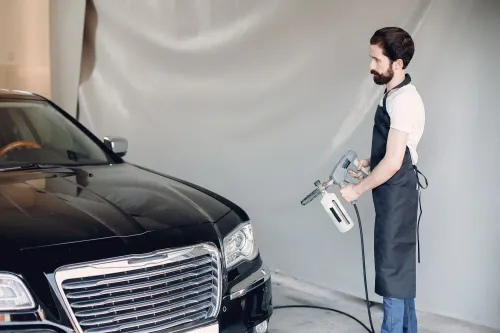
Movement depends on the design. In a manual setup, you walk around the vehicle while pulling the hose from its reel. An articulated boom swings across the bay, while a rail-mounted arm travels along or around the vehicle envelope. The wall-mounted assembly stays in place; the operator, hose, boom or arm provides the coverage.
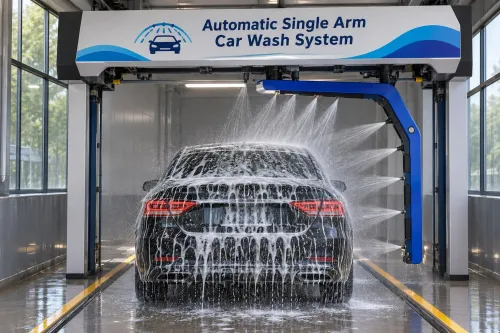
Do not treat “automatic car wash installation” as a complete specification. Confirm whether the system has only a trigger gun, timed chemical dosing, programmed wash controls, or automatic vehicle positioning and washing.
Wall mounted cleaning equipment differs from other methods in both movement and fixed infrastructure:
| Option | How it works | Main distinction |
|---|---|---|
| Wall-mounted system | Fixed pump and reel, hose, boom or arm | Uses wall space; coverage depends on reach or automation |
| Portable pressure washer | Pump and hose move between locations | Flexible, but requires floor handling and setup |
| Freestanding gantry | A frame travels over or beside the vehicle | Needs more floor space and clearances |
| Brush rollover machine | Brushes move around a stationary vehicle | Contact washing, unlike spray-only equipment |
| Manual touchless bay | Operator directs high-pressure lance | Labour-intensive, with no automated vehicle movement |
Service access must remain clear for pump, filter, unloader-valve and hose-reel maintenance.
The Daily-Operation Test: Space, Volume and Labour
A wall mounted car wash system fits a site with a permanent bay, predictable vehicle positions and enough daily work to justify fixed equipment. It suits a fleet depot, workshop, bus yard or compact detailing bay where the same wash point handles vehicles repeatedly and floor space has greater value than mobility.
Run this daily-operation test:
- Measure whether vehicles can enter, stop within the hose or boom reach, and leave without reversing through the queue.
- Compare the bay’s wash-cycle time with the number of vehicles arriving during the busiest period.
- Confirm that one operator can move around the vehicle safely without crossing the exit path or stretching the hose across traffic.
- Check that the vehicle mix fits the available width, length and clear height, including buses, vans or trucks if they share the bay.
- Allow time for pre-rinse, chemical application, rinsing, inspection and repositioning; pressure-washing time alone understates labour demand.
- Reserve access for hose-reel servicing, pump checks and detergent replenishment without closing the whole wash area.
The arrangement works poorly when vehicles vary sharply in size, wash locations change throughout the day or the operation is temporary. A portable skid or mobile pressure washer gives more freedom in those conditions, while a fixed wall system rewards repetition.
Do not equate “automatic” with unattended washing. A specification must state whether the operator uses only a trigger gun, timed chemical dosing, programmed wash controls or full vehicle positioning and washing.
Check the Wall, Bay and Drainage Before Ordering
Before ordering, confirm that the wall, complete bay and drainage route can support the installation—not just that the machine dimensions fit. An industrial wall mounted washer transfers static weight, hose-reaction forces, vibration and accidental pulling into its support structure.
1. Inspect the mounting surface. Record whether it is reinforced concrete, sound masonry or structural steel, then verify concrete condition, slab thickness, anchor locations and permission for through-bolts or engineered anchors. Reject cracked masonry, lightweight partition walls and insulated panels unless an engineer designs an independent support frame.
2. Measure the entire operating envelope. Record vehicle length, width and height, approach and exit space, pedestrian clearance, queue space, hose-reach radius, mounting height and operator position. A stated machine space such as 7,000 mm × 3,500 mm × 3,000 mm is not the complete customer bay.
3. Trace vehicle movement with the largest vehicle. Confirm that doors, mirrors, roof equipment and turning paths clear the wall, boom and hose, and that another vehicle cannot block the exit or emergency isolation point.
4. Protect service access. Leave working room for pump-oil and seal inspection, inlet-filter cleaning, unloader-valve service, hose-reel replacement and draining. Boxing the pump into a tight corner turns a compact footprint into a costly repair.
5. Map wastewater collection. Provide a sloped floor, trench or channel drain, sediment separation and, where required, an oil or hydrocarbon separator before discharge or reuse. Never route wash water to a storm drain; detergent, oil, metals and suspended solids can leave the site uncontrolled.
Put mounting height, bay drainage, water source and storage, electrical supply, detergent storage, reclaim arrangement, lighting, operator access and emergency isolation into the installation brief. Each interface needs a marked location, not a later assumption.
Verify Power, Water and Environmental Controls
Installation should not start until these interfaces are confirmed. An industrial wall mounted washer needs a dedicated electrical supply with correctly sized conductors, earthing, residual-current protection, emergency isolation and cable routes clear of spray. Specify an appropriate ingress-protection rating for exposed equipment, then protect the motor and control panel from detergent and water entry.
| Interface | Ready arrangement | Failure if omitted |
|---|---|---|
| Electrical | Rated supply, RCD or RCCB, earthing, isolator, protected cabling and compliant panel location | Shock risk, nuisance trips or motor and control damage |
| Water supply | Tested flow and pressure, inlet tank or booster where needed, filtration and softening based on water quality | Cavitation, blocked nozzles and shortened pump life |
| Treatment and discharge | Channel drain, controlled collection, sediment trap, oil or hydrocarbon separator where required, and consent for discharge or reuse | Solids, oil and detergent reach prohibited drains |
In Coimbatore, test hardness, inlet pressure, suspended dirt and summer supply reliability before selecting the pump. A storage tank, booster, filter or softener is a site finding, not an assumption.
Keep detergent in a labelled, bunded location with compatible dosing lines. Route reclaim water through the wash-bay collection system; never send wash water to a storm drain, because it carries detergent, oils, metals and suspended solids. Confirm lighting, operator clearance, ventilation, maintenance access and the location of every isolation point in the installation brief.
Choose the System Around the Work, Not the Headline Pressure
Choose by vehicle flow, operator movement and repeatability, not by the highest pressure figure. A powerful pump still underperforms if the hose cannot reach the rear, the operator blocks traffic or maintenance requires closing the bay.
| Option | Best fit | Main compromise |
|---|---|---|
| Wall-mounted system | Predictable vehicle positions, compact permanent bays and repeated fleet work | Reach depends on mounting point; poor walls and boxed-in pumps create service problems |
| Portable washer | Changing wash locations, mixed vehicle sizes or temporary operations | More setup, hose handling and labour for every vehicle |
| Freestanding gantry | A dedicated bay needing consistent coverage around varied vehicle bodies | Uses more floor space and requires clear gantry travel |
| Automatic bay | High volume with programmed cycles and minimal operator input | Higher installation complexity, civil work and capital cost |
Your installation brief must define the vehicle envelope, hose-reach radius, mounting height, operator clearance, drainage, water source and storage, electrical supply, detergent storage, reclaim system, lighting and emergency isolation. State whether automation means a trigger gun, timed dosing, wash-program controls or fully automatic positioning.
For an automatic car wash installation in Coimbatore, record inlet pressure, water hardness, dust exposure and wastewater-consent conditions; add filtration, a booster, inlet tank or softening only when the survey supports it. Require service access to the pump, inlet filter, unloader valve and hose reel.
Elite Car Spa Equipments should document these interfaces before wall mounted cleaning equipment is selected.
Related products
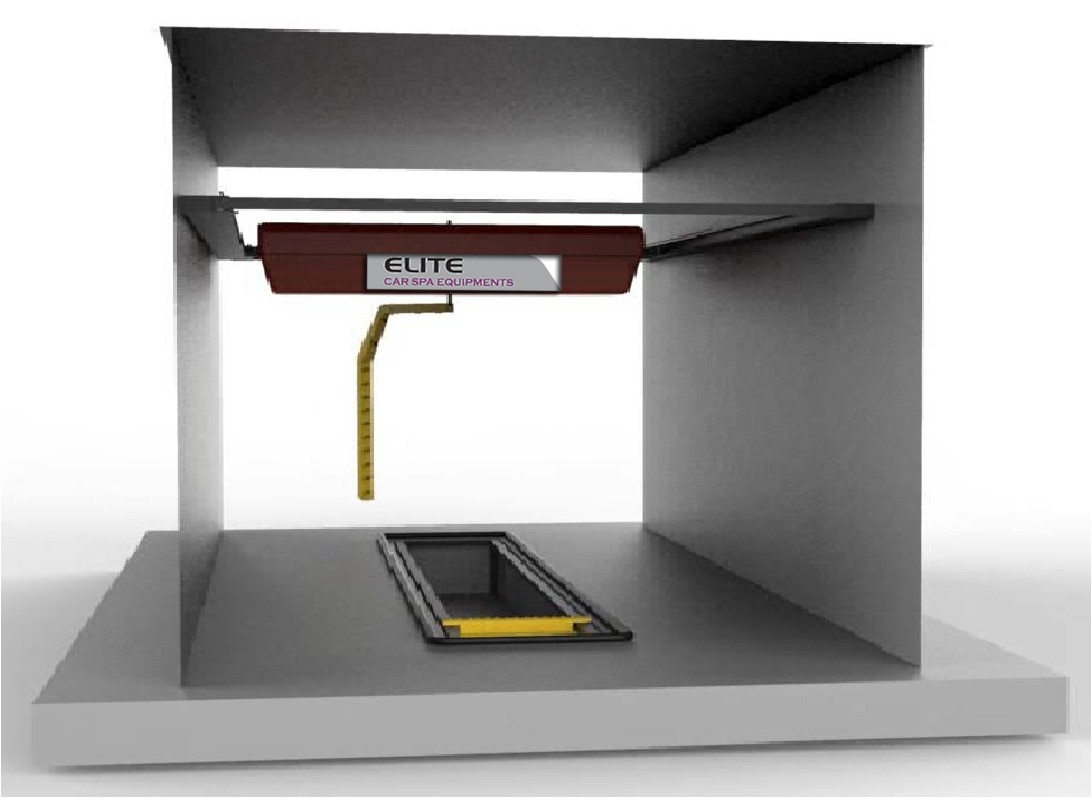 | AUTOMATIC CAR WASH SYSTEM WIN360°“F”-WALL MOUNTED SYSTEM MODEL : WIN360°-MOUNTED SYSTEM:- Technical Specification - Details Min. View product → |
 | AUTOMATIC MACHINES Automatic Single Arm Win360 Car Wash System ₹665000 MODEL : WIN360°-MOUNTED SYSTEMTechnical SpecificationDetailsMin. View product → |
Frequently asked questions
What is a wall-mounted car wash system?
It fixes the pump, motor, hose reel or boom, lance and chemical-delivery unit to a structural wall, column or engineered support frame. Water and detergent reach a hand-held spray gun, powered wash arm or small gantry through a hose.
When does a wall-mounted car wash system make sense?
It makes sense when floor space is limited, the wall can support the equipment, hose reach covers the bay and the expected wash volume suits the available labour and cycle time.
What should you check before installing industrial wall-mounted cleaning equipment?
Check the wall construction and anchors, bay dimensions, hose clearance, floor slope, drain location, wastewater route and access for servicing the pump, reel and chemical unit.
Which power, water and environmental controls are important?
Verify the electrical supply and protection, incoming water flow and pressure, isolation points, backflow protection, chemical compatibility, wastewater containment and any local discharge requirements.
Is higher pressure always better for a car wash system?
No. Choose pressure and flow for the task, surface and detergent method. Excessive pressure can damage paint, seals, trim and equipment while increasing splash and water consumption.
Related product
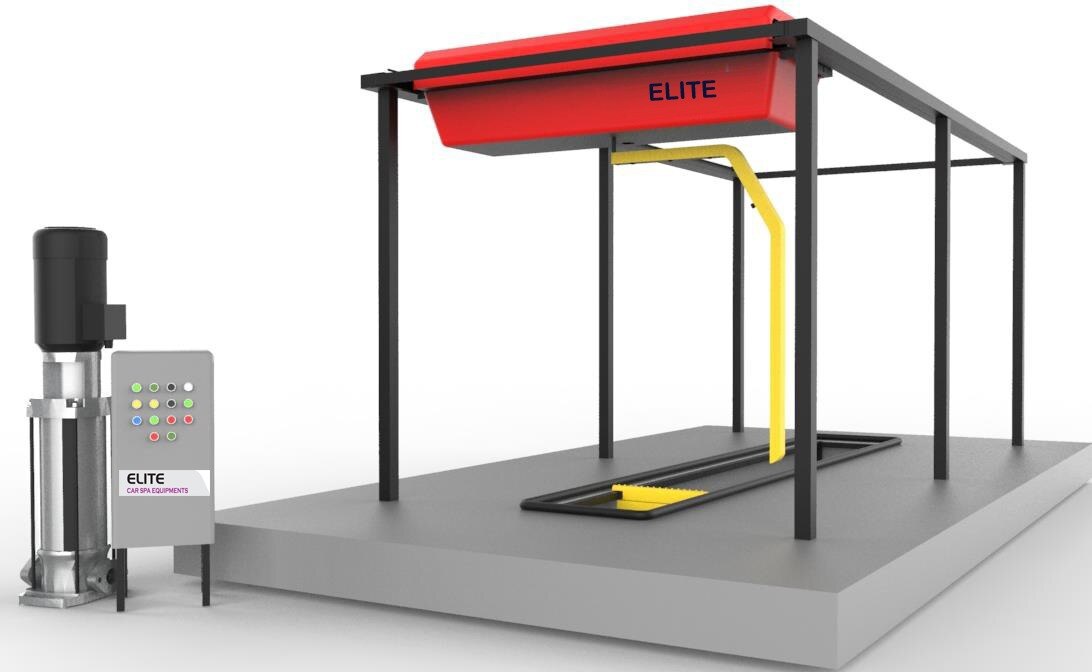 | AUTOMATIC CAR WASH SYSTEM WIN360°“F”-STRUCTURE MOUNTED SYSTEM MODEL : WIN360°-MOUNTED SYSTEM Technical Specification - Details Min. View product → |
Keywords