Workshops need more than a strong chemical: they need a repeatable process that cleans wheels and tyre walls without staining finishes, wasting concentrate or leaving brown residue under dressing. By the end, you will know how to test, dilute, apply, rinse, record and purchase the product for consistent workshop use.
Key takeaways
- Clean one cool wheel at a time and never let diluted cleaner dry.
- Adjust dilution to soil level, wheel finish and daily workload.
- Patch-test hidden areas before applying cleaner across a full wheel set.
- Compare cost per ready-to-use litre, delivery time and batch details.
Use a controlled wheel-and-tyre cleaning sequence
A clean, dry wheel starts with control: work on one wheel at a time, keep the surface cool and prevent the diluted wheel and tyre cleaner for workshops from drying.
1. On vehicle arrival, park on level ground, apply the handbrake and inspect each wheel. Record damaged clear coat, exposed metal, polished aluminium, chrome, repainted areas and heavy tyre browning. Do not clean a hot wheel; allow it to cool.
2. Put on the PPE specified by the current safety data sheet. Measure concentrate and water by volume using a graduated container, then mix the label’s stated dilution in a labelled sprayer. Never guess the ratio or use an unmarked bottle.
3. Remove loose grit with a thorough water rinse, working from the top of the wheel downward. Wet the wheel face, spokes, barrel and tyre sidewall before applying chemical.
4. Spray the diluted cleaner evenly on one wheel, starting with the tyre and then the wheel face. Keep the spray off people, electrical connectors and unnecessary brake components.
5. Allow only the label’s stated dwell time. Do not let the solution dry; re-wet the surface if hot weather shortens the working time.
6. Agitate the tyre with a stiff tyre brush and the wheel in small sections with a suitable soft wheel brush. Rinse the tools between wheels.
7. Rinse completely behind spokes, around wheel nuts and through the tread edge until runoff is clear and no foam remains. Repeat a missed area rather than increasing concentration.
8. Blow out water from spokes, lug recesses and the valve area, then dry the face and sidewall with a clean microfiber towel. Inspect for residue before releasing the vehicle.
Set dilution by soil, surface and workload
Measure dilution by volume, not by eye. Use a graduated measuring jug for the concentrate and a marked dilution bottle or proportioning dispenser for the water. Treat 1:10 as one volume of concentrate plus 10 volumes of water, producing about 11 litres of working solution from 1 litre of concentrate; 1:3 produces about 4 litres.
Choose the weakest label-permitted strength that removes the soil without repeated brushing.
- Use the routine-cleaning dilution for lightly soiled tyres and wheels washed frequently.
- Move stronger within the supplied label or technical data sheet range for brown tyre residue, oily deposits or wheels cleaned after tyre removal.
- Cool hot wheels before application, and keep every application wet for the label-stated dwell time. Never allow the solution to dry on the surface.
Calculate each vehicle’s requirement from measured usage, not foam volume. Spray one representative four-wheel vehicle, collect any unused solution, and record the litres applied; call this V. For N vehicles, ready-to-use volume equals N × V. At 1:10, concentrate required equals that total divided by 11; at 1:3, divide it by 4.
Add a small, documented allowance for spray loss rather than guessing.
Track vehicles cleaned per litre, dwell time, brush effort, rinse demand and the dried finish. That output tells you whether a professional tyre cleaning chemical in Coimbatore is economical; a thick foam alone does not. Record the working ratio beside each batch so operators do not change strength between bays.
Check chemistry and surface compatibility before full use
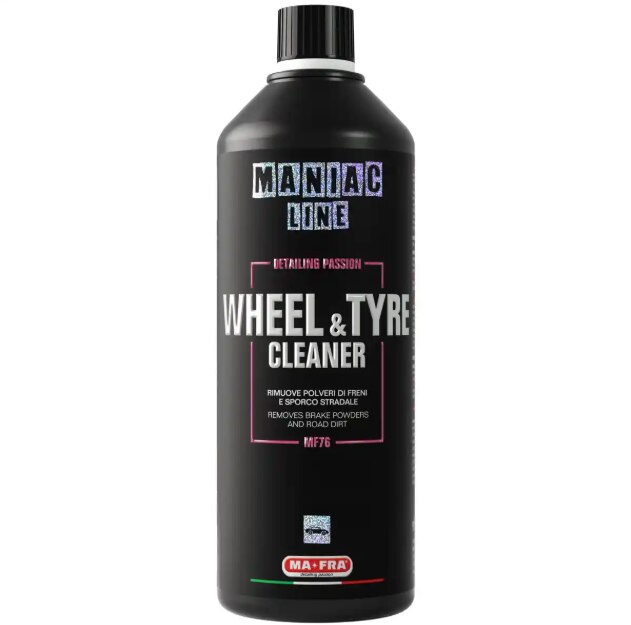
A clean-looking wheel can still be a poor candidate for an alkaline cleaner if its coating is failing. Test Mafra Maniac Wheel & Tyre Cleaner on a hidden section before routine use, especially when the wheel is hot, scratched or visibly oxidised.
| Surface | Main caution | Decision |
|---|---|---|
| Polished aluminium | Alkaline chemistry can leave staining or a patchy finish | Test first; stop if colour or gloss changes |
| Anodised aluminium | Damaged anodising can react unevenly | Use only after a hidden-area test |
| Chrome | Weak spots and pitting can show marks after cleaning | Test, rinse fully and dry |
| Repainted or clear-coated wheels | Existing coating failure increases patching risk | Do not use over lifting, cracked or exposed coating without approval |
| Brake discs, pads and calipers | Cleaner is intended for wheels and tyres, not brake friction surfaces | Avoid soaking these parts; rinse overspray immediately |
Use a cool, dry test area that is out of sight, dilute the product exactly as the supplied label or technical data sheet specifies, and apply only enough to wet the section. Keep the stated dwell time, never let the solution dry, then agitate lightly and rinse with clean water.
Inspect both immediately and after the surface dries.
If the test leaves whitening, colour change, streaks, roughness or altered tyre appearance, reject that dilution or surface combination. Remember that this is an alkaline detergent cleaner for road film, oily soil and brake dust; it is not an acid descaler or an iron-removing fallout chemical.
Build a repeatable process for Coimbatore workshop conditions
Use one written bay SOP and one dispensing method for every vehicle. A dilution-control bottle with volume marks, a marked trigger sprayer or a proportioning dispenser prevents operators from estimating concentrate by eye. Record the label or technical data sheet ratio, operator, date and vehicle count.
- Check that the wheel is cool, then rinse loose grit with water.
- Apply the measured solution to one wheel section at a time. Use the label’s tyre and wheel-face dilution; tyres often need the stronger permitted mix because brown, oily residue is heavier there.
- Keep the stated dwell time, but never allow the solution to dry. In Coimbatore’s hot weather, work in shade and shorten the section size if evaporation is rapid.
- Agitate with separate wheel and tyre brushes. Continue on the tyre wall until brush foam and rinse water stop turning brown or grey.
- Rinse completely, using extra water around spokes and brake areas, then dry with clean air or towels before applying dressing.
Wear chemical-resistant gloves, eye protection and suitable work clothing; keep the bay ventilated. Rinse brushes after each vehicle and reject worn brushes that hold abrasive grit. A professional tyre cleaning chemical in Coimbatore should be judged by vehicles cleaned per litre, dwell time, brush effort, rinse demand and dry finish—not foam volume.
If hard-water spots remain, increase final-rinse coverage and use softened or demineralised water. Collect contaminated wastewater where required, keep it out of storm drains, and follow the site’s approved disposal route.
Buy the product using ready-to-use cost and supply checks
The cheapest bottle is not always the lowest-cost option: compare the price per litre of ready-to-use solution. One litre of concentrate mixed 1:10 produces about 11 litres, while the same litre mixed 1:3 produces about 4 litres, so calculate from your approved working dilution and daily vehicle volume.
Before you buy Mafra Maniac Wheel & Tyre Cleaner, ask the supplier for:
- The current label showing the permitted dilution range, concentrate or ready-to-use format, pack size and surface warnings.
- The Safety Data Sheet, batch number, shelf-life date and importer or distributor details.
- Compatibility guidance for polished aluminium, anodised surfaces, chrome, repainted wheels and damaged clear coat; test an hidden area before routine use.
- A replacement sprayer that resists alkaline chemistry, plus instructions for storing and labelling secondary containers.
- The delivered cost per ready-to-use litre and the confirmed replenishment lead time.
Never decant it into an unlabelled bottle. Retain the product name, dilution information and hazard warnings so an operator does not mistake it for tyre dressing, shampoo or solvent.
Local support becomes valuable when your workshop needs a repeatable chemical station, compatible sprayers, PPE and storage guidance, or dependable stock before a pack runs out. Elite Car Spa Equipments can help coordinate equipment and replenishment decisions for a workshop in Coimbatore, particularly where hot conditions, hard-water spotting and final-rinse requirements affect chemical consumption.
Ask for delivery timing in writing.
Frequently asked questions
How should you use Mafra Maniac Wheel Tyre Cleaner in a workshop?
Clean one wheel at a time, keep the wheel cool, apply the diluted cleaner evenly, agitate suitable areas, rinse thoroughly and prevent the product from drying.
How do you choose the dilution for wheel and tyre cleaner?
Set dilution according to brake dust, tyre browning, wheel finish and workshop workload, then record the working ratio that delivers clean results without unnecessary chemical use.
How can you check compatibility before using professional tyre cleaning chemical?
Read the product label and safety information, identify the wheel finish and tyre material, and test the diluted product on a hidden area before full application.
What should you check before buying Mafra Maniac Wheel Tyre Cleaner in Coimbatore?
Compare ready-to-use cost, pack size, required dilution, supplier availability, delivery time, batch details and storage requirements.
Keywords